
Hair Transplantfor UK Patients
Hair restoration by experienced surgeons at a certified private hospital, with UK support throughout.
A doctor reviews your case before anything is booked.
What is a Hair Transplant?
A hair transplant is a surgical procedure, usually done under local anaesthetic, that moves hair follicles from one part of your scalp to areas of hair loss. It does not create new follicles: the number and quality of donor grafts available limit what can be achieved.
Who May Consider Treatment?
Suitability depends on the diagnosis, age, pattern and progression of hair loss, donor density, medical history, scalp health and expectations. Not every type of hair loss responds well to transplantation.
- Receding hairline
- Thinning hair
- Hair loss or bald spots
- Healthy donor hair at the back of the scalp (assessed by the surgeon)

Common Techniques
FUE describes how follicles are harvested; DHI describes placing grafts with an implanter pen. A surgeon may use both in the same operation. The medical team’s skill and the suitability of the plan matter more than the name of the technique.
Recovery and Aftercare
Recovery is gradual. The hospital gives you a written aftercare plan, and your surgeon confirms the timings for you.
First Days
Your scalp may feel tender and a little swollen. The hospital shows you how to sleep, wash your hair and protect the new grafts before you fly home.
First Weeks
Small scabs fall away and the transplanted hairs often shed, which is expected. Your surgeon tells you when you can go back to work and exercise.
Results over 12 Months
New hair usually starts to grow after 3–4 months and continues to develop over about a year, sometimes longer. Results vary from person to person.
What Happens During Treatment?
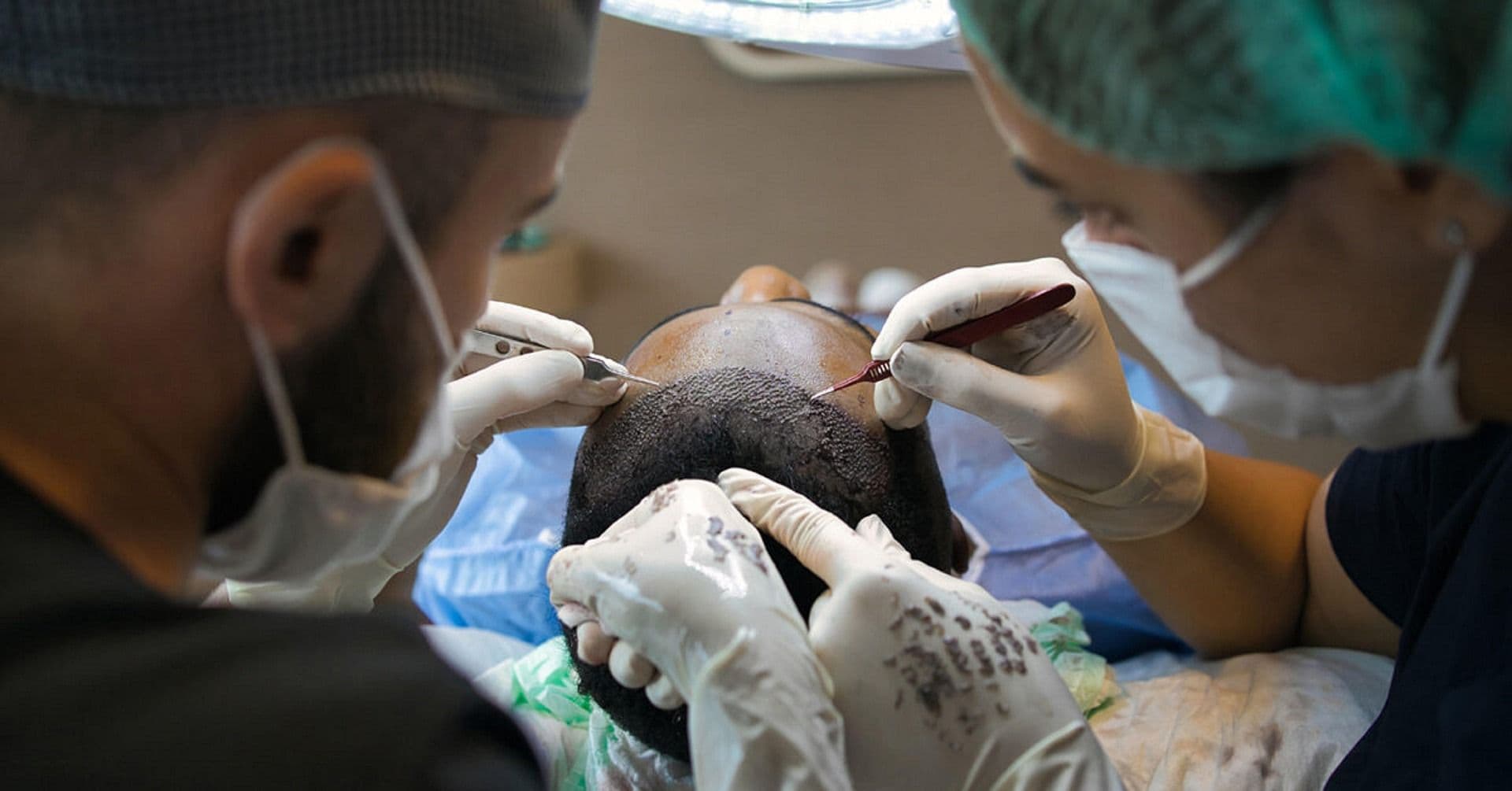
A clinician assesses the donor and recipient areas, agrees a conservative hairline design and estimates the graft requirement. The donor area is prepared, local anaesthesia is administered, and grafts are collected and carefully placed. A procedure may take several hours. The medical team should explain who performs the extraction, creates the recipient sites and places the grafts.
Risks and Limitations
Possible complications include infection, bleeding, scarring, folliculitis, poor growth, uneven hairlines, visible donor-area thinning, altered sensation and a result that does not meet expectations. FUE can leave many small dot-like scars even though there is no long linear scar. Natural hair loss may continue in areas that were not treated.
Your Treatment and Travel Arrangements
The hospital’s hair transplant price includes airport transfers and accommodation. Flights are arranged separately. The hospital must confirm the operating team, medical suitability, aftercare instructions, emergency contact, expected stay and whether a further visit is needed. Ask whether medication and follow-up are included, and what happens if travel changes or a complication occurs.
Questions to Ask the Hospital
- Who is the medically responsible surgeon and which steps do they personally perform?
- What is my long-term hair-loss plan, including any non-surgical options?
- How many grafts are expected, and how is donor overharvesting avoided?
- What support is available once I return to the UK?
- How are complications, poor growth and complaints handled?
Estimated Price Range
Hair transplant, from approximately
€1,350
Included: Accommodation, Airport transfers
Flights are not included
Final pricing depends on individual assessment and treatment requirements.
Prices checked October 2026

Frequently Asked Questions
How long does hair transplant recovery take?
Tiny scabs in the treated area usually fall off naturally within about 7–10 days, and many people resume light daily activities after a few days. Full healing of the scalp can take a few weeks, and some people need one to two weeks away from work. Follow your surgeon’s advice for your job and recovery.
Which technique is right for me?
It depends on your hair loss pattern, donor area and desired density. FUE describes how grafts are taken from the donor area; DHI describes placing grafts with an implanter pen, and the two are often used together. Neither label on its own means a better result. A consultation with a specialist is needed to choose the right approach for your case.
Is the procedure painful?
The procedure is performed under local anaesthesia to reduce pain during treatment, although some discomfort is possible. Some mild discomfort or tightness may occur afterwards, but it is usually manageable and temporary.
How many grafts will I need?
The number of grafts varies depending on the level of hair loss and desired density. It can range from 1,000 to 4,500+ grafts. A proper assessment is required to determine the exact number for your individual case.
When will I see the results?
Initial growth usually starts after 3–4 months. Noticeable improvements appear around 6 months, and full results often take around 12 months or longer and vary by individual.
Are the results permanent?
Transplanted hair is taken from areas that are usually resistant to hair loss, so it often lasts for many years, although some grafts may not survive. Natural ageing and genetics can still affect non-transplanted hair over time.
Ready to Take the First Step?
Speak with our team today.
A doctor reviews your case before anything is booked.